REPORT ON PRESS BRIEFING BY THE KUMASI METROPOLITAN ASSEMBLY (KMA)
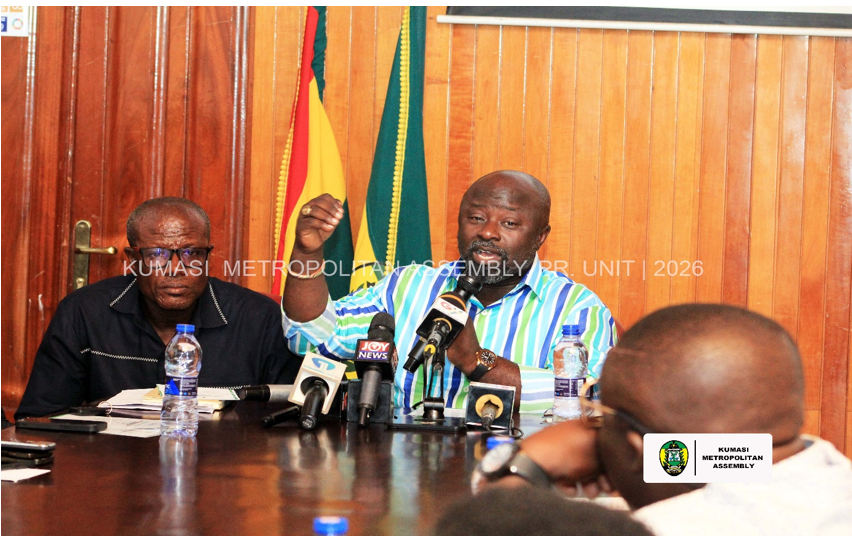
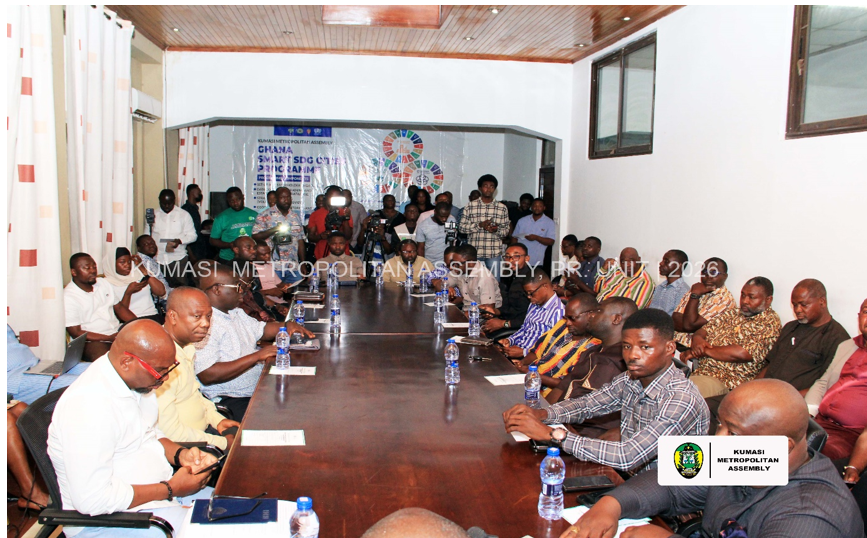
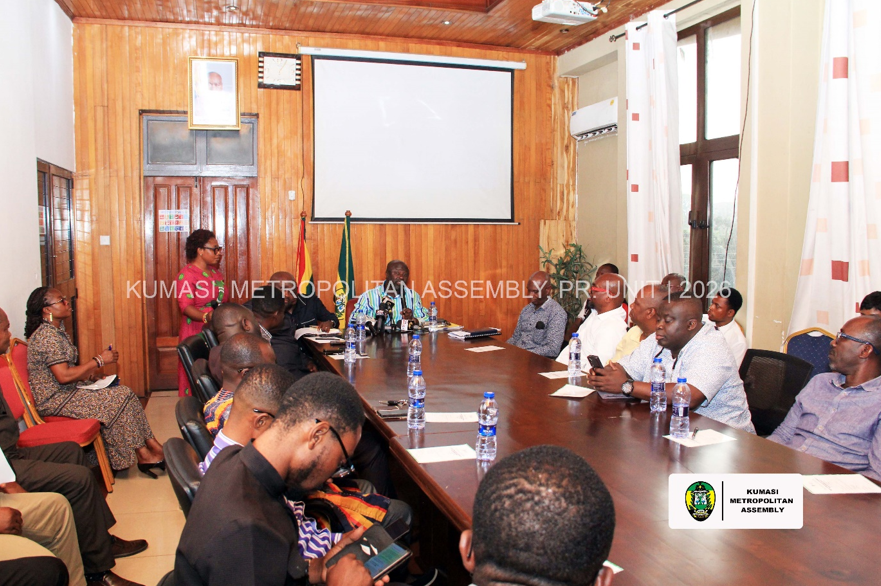
The Kumasi Metropolitan Assembly (KMA), under the leadership of the Mayor of Kumasi, Hon. Richard Ofori-Agyemang Boadi, held a press briefing with members of the media to share not just plans and policies, but a heartfelt vision for the future of Kumasi in 2026. The engagement was an opportunity for the Mayor to speak directly to the people of Kumasi through the media, outlining a clear roadmap towards a city that is vibrant, clean, and welcoming to all.
Beyond figures and projects, the briefing reflected a deep commitment to improving the everyday lives of residents—creating safer streets, cleaner neighbourhoods, better schools, reliable healthcare, and spaces where culture and creativity can thrive. The Mayor reaffirmed his belief in transparent, accountable, and inclusive governance, anchored on partnership with citizens and stakeholders.
Governance, Communication, and Media Engagement
In his address, the Mayor emphasized the critical role of the media as partners in development. He noted that effective communication and accurate dissemination of information are essential in building public trust and ensuring citizen participation in governance. The press briefing therefore served as an avenue to clearly outline priorities for 2026 while encouraging the media to support the Assembly’s mandate through responsible reporting and public education.
The Mayor reiterated his vision of an open-door administration that values stakeholder engagement, constructive criticism, and collaboration in achieving sustainable urban development.
Financial Reforms and Debt Management
A major highlight of the briefing was the Mayor’s candid discussion on the financial realities facing the Assembly. He announced decisive steps to clear all fuel debts owed by the Kumasi Metropolitan Assembly dating back to 2013—a move aimed at restoring trust with service providers and ensuring smoother day-to-day operations.
The Mayor also outlined plans to restructure judgment debts inherited by the Assembly. He noted that these difficult but necessary decisions are about safeguarding the future of Kumasi, easing financial pressure, and freeing resources to invest directly into projects that benefit residents across the metropolis.
Sanitation and Environmental Management
Sanitation featured prominently in the Mayor’s vision, underscoring his belief that a clean city reflects dignity, discipline, and pride among its people. He announced the introduction of morning cleaning as a shift from the traditional night cleaning system, explaining that this approach will encourage visibility, shared responsibility, and community involvement.
The Mayor appealed to residents, traders, and institutions to see cleanliness as a collective duty, stressing that sustainable sanitation can only be achieved when everyone plays a role in keeping Kumasi clean.
Roads and Urban Infrastructure Development
The Mayor provided updates on several critical road and transport infrastructure projects aimed at easing traffic congestion and improving mobility within the metropolis. He announced that plans are far advanced for works to commence on the Santasi–Bekwai Roundabout, a project expected to significantly improve traffic flow in the area.
He further noted that construction works are ongoing on the Santasi–Asokwa Interchange, while steady progress is being made on the Suame Interchange. These flagship projects form part of a broader strategy to modernize Kumasi’s road network and enhance economic activity.
In addition, the Mayor disclosed that 240 solar streetlights have been installed in selected communities across the metropolis. The initiative is intended to improve night-time visibility, enhance public safety, and promote the use of renewable energy.
Health Sector Interventions
In addressing healthcare, the Mayor emphasized the importance of protecting the city’s most vulnerable—its children. He announced that construction of a pediatric hospital is scheduled to commence within the month, describing the project as a vital investment in the health and future of the metropolis.
He noted that the facility will bring specialized care closer to families, reduce pressure on existing hospitals, and strengthen Kumasi’s overall healthcare delivery system. He emphasized that investing in healthcare infrastructure remains a top priority for the Assembly.
Education Infrastructure Development
The Mayor also highlighted significant interventions in the education sector. Islamic Senior High School is set to benefit from a new dining hall with a capacity of 4,000 students, a project aimed at improving student welfare and enhancing the learning environment.
Similarly, Kumasi Girls Senior High School will benefit from the construction of a new girls’ dormitory to address accommodation challenges and improve living conditions for students. These projects underscore the Assembly’s commitment to supporting education as a foundation for human capital development.
Culture, Tourism, and the Black Star Experience
Touching on culture, tourism, and entertainment, the Mayor announced that Kumasi is set to benefit from major projects under the Black Star Experience initiative. Chief among them is the proposed construction of an ultra-modern theatre with a seating capacity of 1,500. The facility is expected to boost the creative arts industry, create employment opportunities, and position Kumasi as a cultural and entertainment hub.
In addition, plans are underway to develop open parks for children, featuring amphitheatres and other recreational facilities. These spaces are intended to promote leisure, creativity, and family-friendly activities within the metropolis.
Conclusion
The press briefing offered more than a policy outline—it presented a people-centered vision for Kumasi’s future. Through financial discipline, improved sanitation, strategic infrastructure development, and targeted investments in health, education, and culture, the Kumasi Metropolitan Assembly is laying the foundation for a city that works for everyone.
The Mayor concluded with a call for unity, cooperation, and shared responsibility, urging the media, residents, traditional authorities, and development partners to walk this journey together. With collective effort and commitment, he expressed confidence that Kumasi can be transformed into a modern, inclusive, and economically vibrant city that all residents can be proud of.
I’ve updated the report with a stronger human touch—making it warmer, more people-centered, and reflective of leadership that connects with everyday residents, not just projects and policies.